
About The Show Garden
Gardens That Grow With You was created for the Harrogate Spring Flower Show 2026 as a reflection of how planting can evolve alongside us, adapting to changing needs, seasons and stages of life.
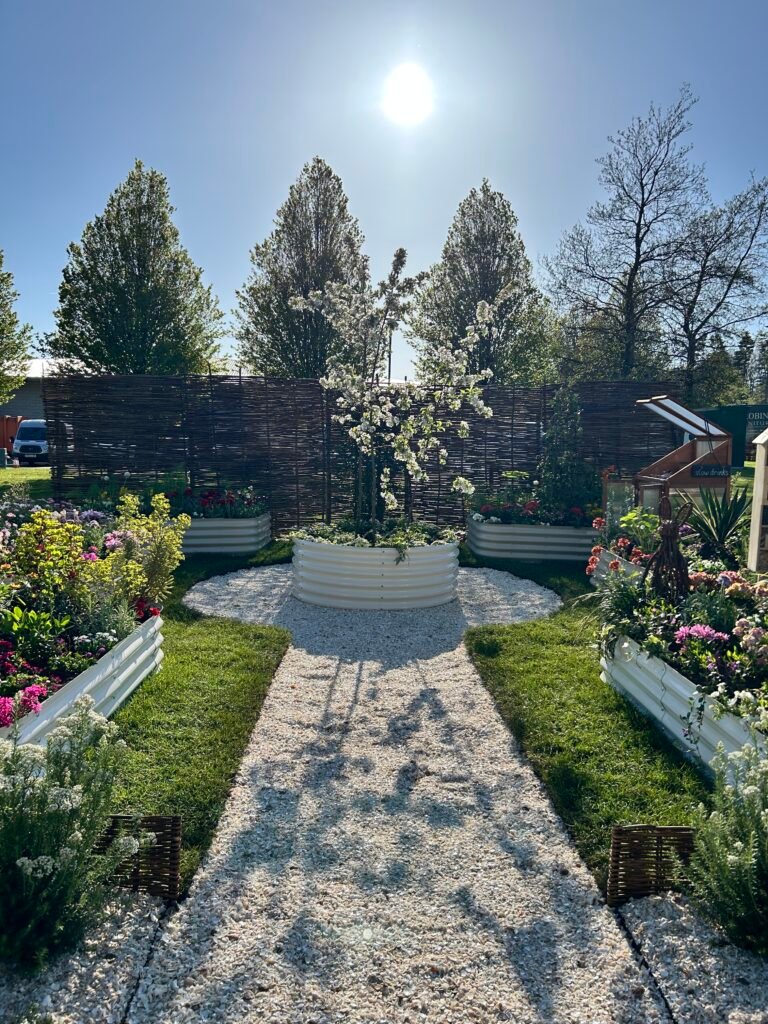
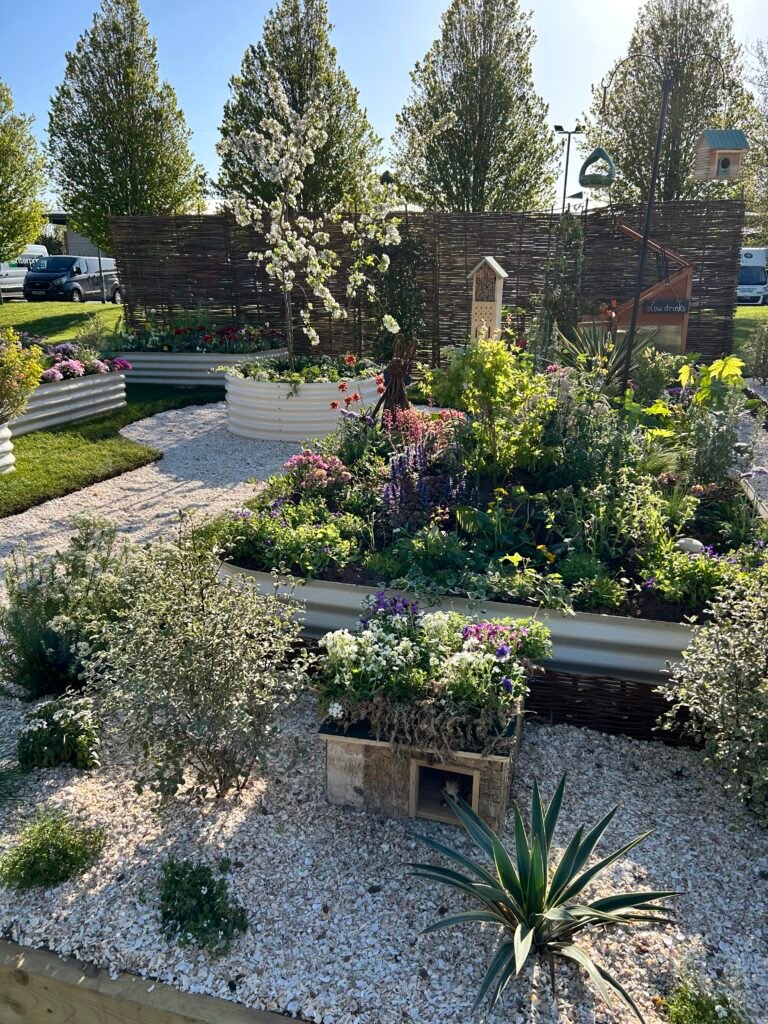
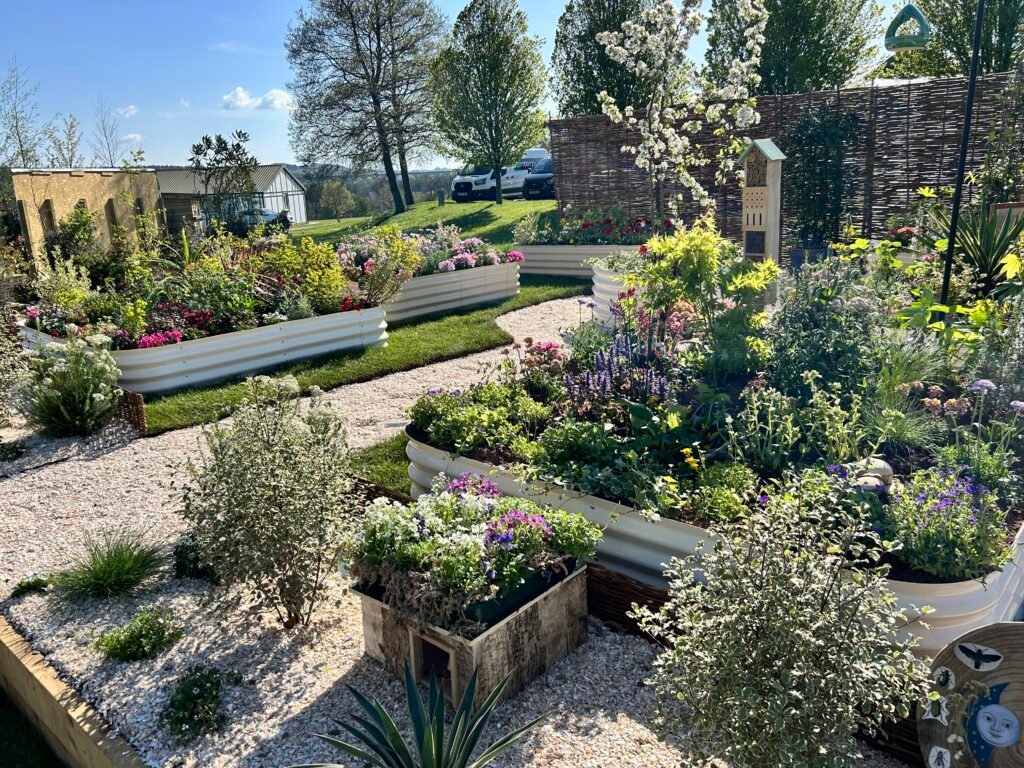
Arranged around a central tree, six raised borders explore different ways we use and experience our gardens, from supporting wildlife and encouraging sensory engagement to creating resilient, family-friendly spaces. A path moves through the centre of the garden and around the tree, creating a continuous flow that reflects the idea of change, reuse and ongoing growth.
Designed to feel both familiar and thoughtful, the garden invites visitors to reflect on how planting choices can shape not just how a space looks, but how it is lived in over time, while remaining connected through a shared structure, rhythm and sense of place.
Design Approach
This garden has been designed as a working demonstration of how thoughtful planting and material choices can be applied to real gardens, not just show settings.
Garden plan
The garden is arranged around a central tree, with six raised borders forming a structured yet natural layout. Each border has been designed with a distinct purpose, allowing different planting approaches to be explored side by side.
Viewed as a whole, the garden demonstrates how thoughtful planting can create spaces that are not only beautiful, but responsive, supporting wildlife, encouraging interaction, and adapting to the needs of those who use them.
The Six Borders
Wildlife Border
Planting designed to support pollinators and beneficial insects, with layered, nectar-rich flowers that bring movement, colour and life throughout the seasons.
Sensory Border
A calming, immersive border designed to be experienced through scent, texture and form. Planting has been carefully selected with strong shapes, gentle contrast and fragrant varieties, making it engaging and accessible, including for those with reduced vision.
Edible Border
A productive and beautiful mix of herbs, edible flowers and useful plants, encouraging everyday interaction with the garden.
Drought-Tolerant Border
Resilient planting selected for changing conditions, demonstrating how gardens can thrive with less water while still feeling full and abundant.
Pet & Child-Friendly Border
A carefully considered selection of safe, robust plants, creating a space that feels relaxed, usable and welcoming for the whole family.
Seasonal Interest Border
A layered planting scheme designed to evolve throughout the year, bringing structure, colour and moments of interest across every season.
Sustainability & Materials
Throughout the garden, materials have been chosen with care, favouring natural, low-impact, sustainable and reusable options wherever possible. This reflects the wider design approach, showing how sustainability can sit naturally within a garden without compromising beauty or character.
Pathways & Mulch
The paths and areas within the wildlife pond have been created using crushed whelk shells, generously supplied by Shell on Earth, a small family-run business based in West Wales. Their support has made this element of the garden possible.
These shells are a by-product of the UK seafood industry, where thousands of tonnes are typically discarded each year.
By repurposing this material, the design supports a more circular approach, transforming what would otherwise be waste into a natural, functional surface within the garden. The shells bring a soft, coastal texture underfoot, helping to soften the overall feel of the garden where harder landscaping materials can appear too rigid, while also contributing to drainage and reflecting light throughout the space.
Their use within both the pathways and the pond connects the garden to wider environmental thinking, demonstrating how considered material choices can reduce waste while enhancing the character and story of a garden.
Fence
The garden is enclosed using hazel hurdles, a traditional, hand crafted and environmentally friendly form of fencing. Made from natural materials, they bring a soft, woven texture that sits comfortably within the planting, avoiding the harshness that more solid boundaries can create.
Their use reinforces the garden’s natural character while supporting a more sustainable approach to materials, demonstrating how simple, time-honoured techniques can be both practical and visually sympathetic within a contemporary garden setting.
Explore the Borders
Each border explores a different way planting can shape how we use and experience our gardens.
Central Tree
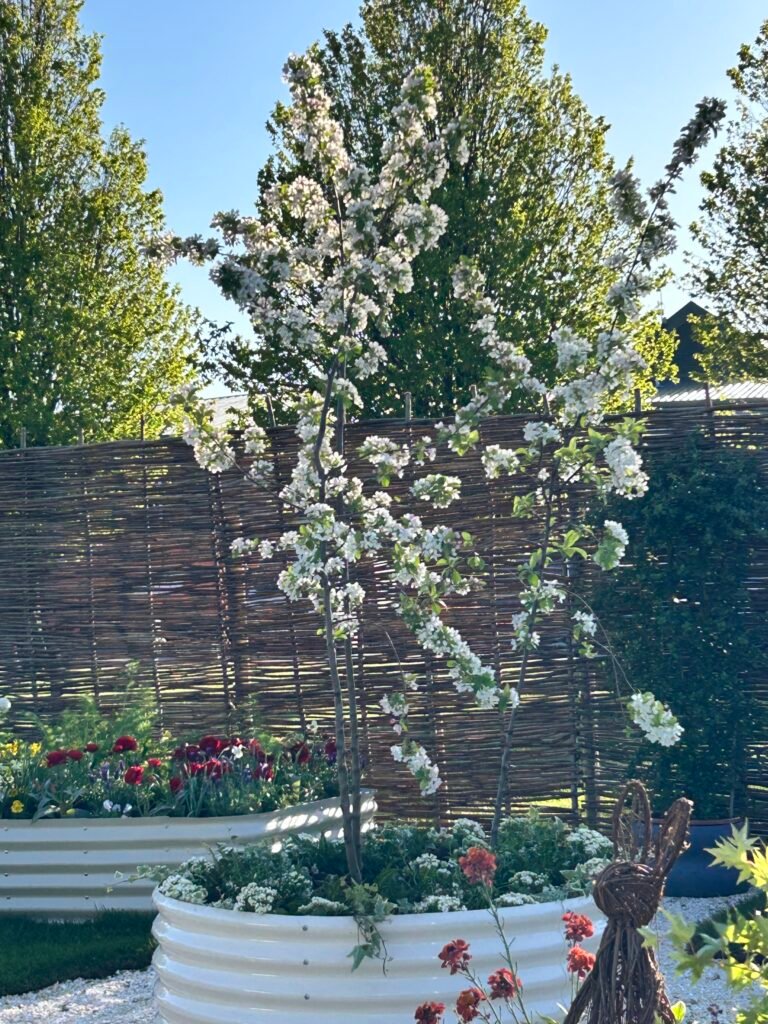
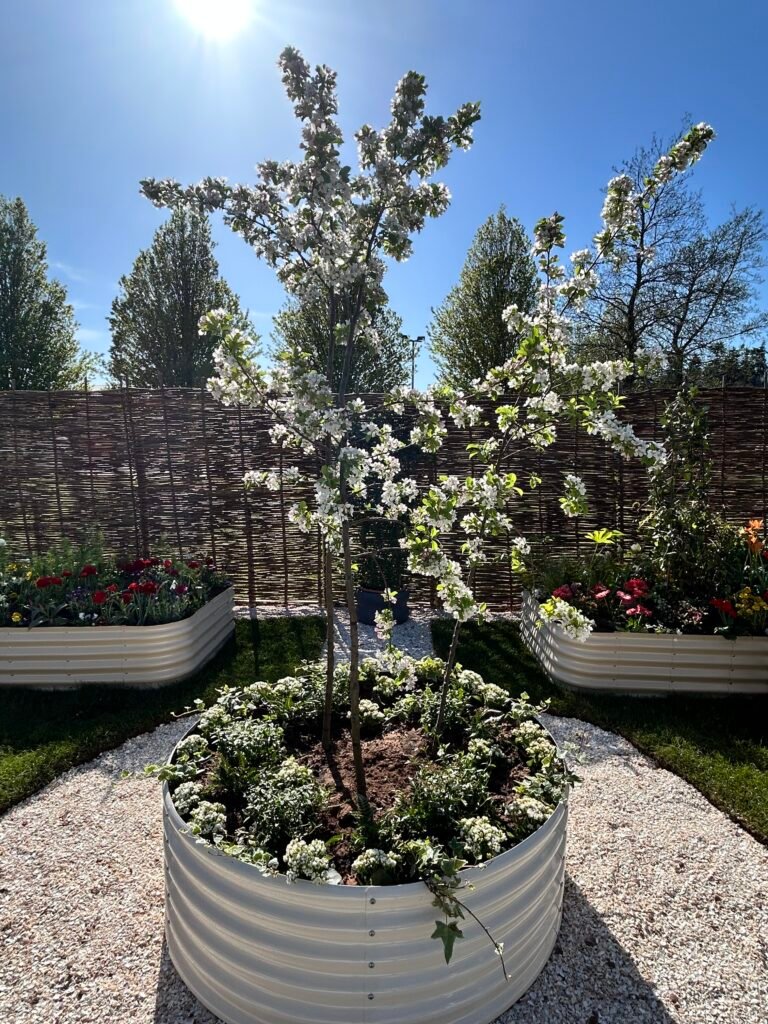
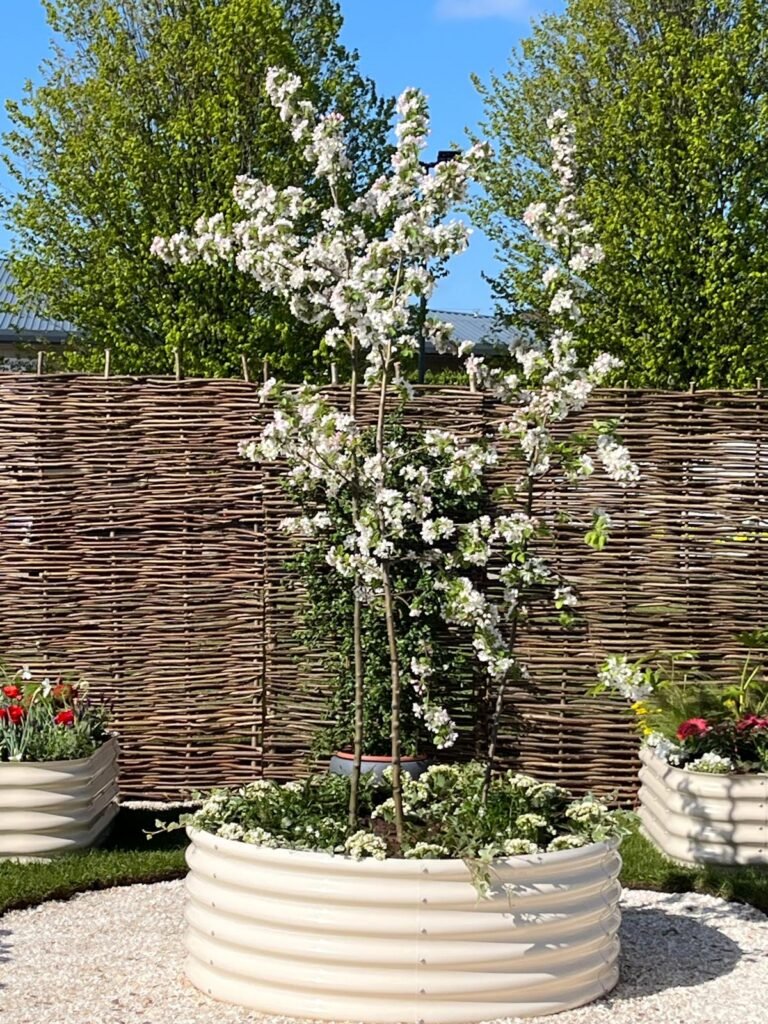
Malus × robusta Red Sentinel
Wildlife Border
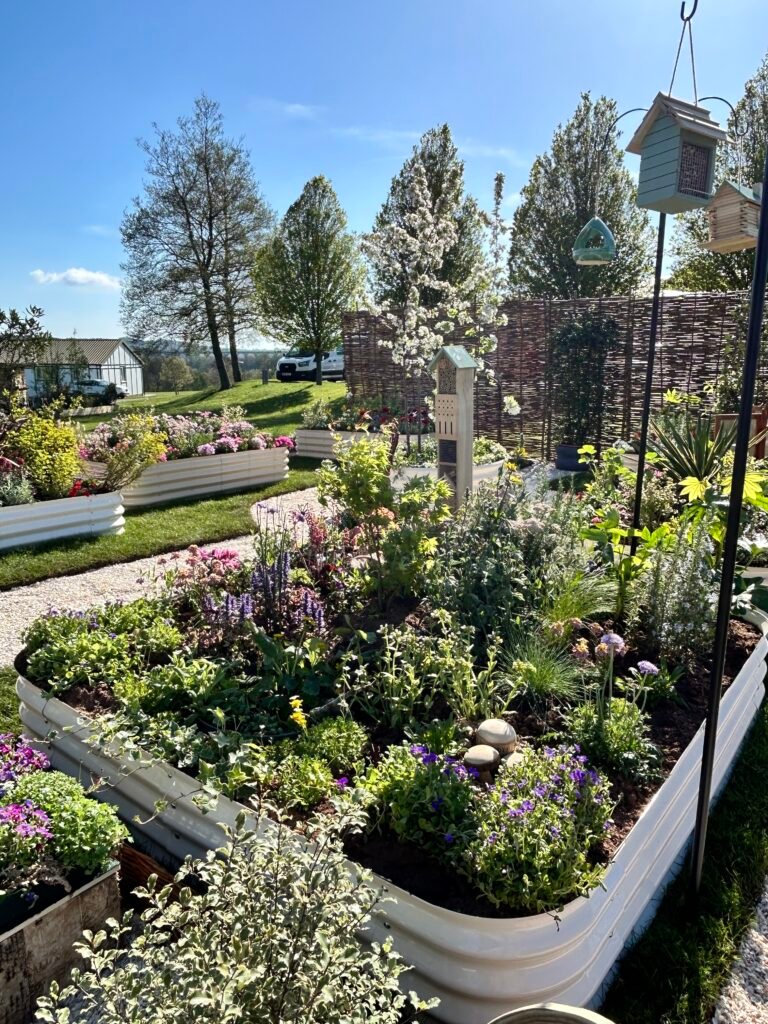
Designed to support a wide range of pollinators and garden wildlife, this border brings together layered planting, habitat features and seasonal interest to create a space that feels alive throughout the day and into the evening.
Nectar and pollen rich perennials, spring bulbs and flowering shrubs are combined with low, sheltering groundcover to provide food, habitat and continuity across the seasons. A soft palette of purples, pinks, whites and silvers is woven through the planting, creating movement, contrast and a natural sense of rhythm within the space.
Planting includes Sweet William, aubrieta, campanula, scabious, snow in summer, pulmonaria, ivy, ceanothus, fatsia, saxifraga, primroses and vinca, selected to support pollinators while remaining visually soft and ornamental.
A small wildlife pond forms a key part of the border, providing both water and habitat. Marginal planting such as Hydrocotyle vulgaris, Equisetum hyemale, Caltha palustris and Myosotis scorpioides has been included to support aquatic life and create a balanced, functioning ecosystem.
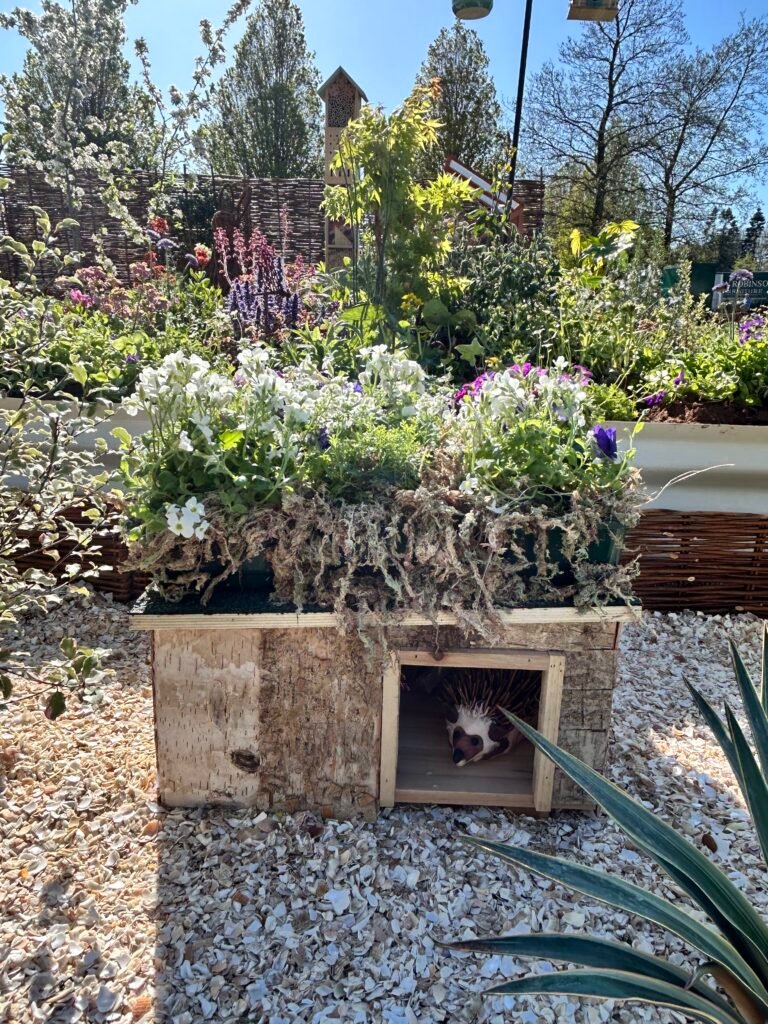
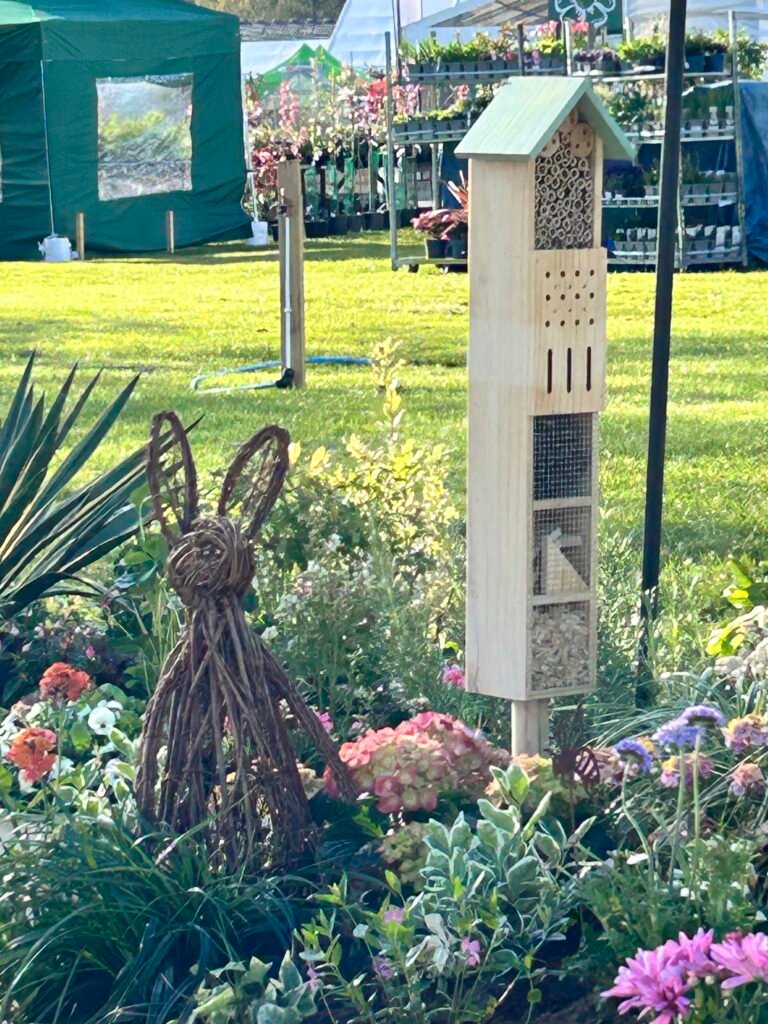
Alongside the planting, a series of features have been integrated to support and highlight garden wildlife. A hedgehog house with a planted green roof of white and pink aubretia, violas and Pratia ‘Icecube’ provides shelter while blending naturally into the border. A pollinator clock illustrates how beneficial insects visit the garden at different times of day and night, encouraging awareness of continuous ecological activity.
A bird feeder chandelier, made using dried flowers and seed heads, allows birds to feed and land naturally within the planting, while bird boxes have been positioned to face east, helping to protect nesting birds from prevailing winds and strong afternoon sun.
Together, these elements demonstrate how thoughtful planting and simple additions can transform a garden border into a functioning, wildlife supporting space, without losing a sense of beauty, softness or cohesion.
Planting palette:
Structure and backdrop:
Fatsia japonica (Japanese aralia)
Ceanothus spp. (Californian lilac)
Hedera helix (Common ivy)
Carex sylvatica (Wood sedge)
Rosmarinus officinalis ‘Miss Jessopp’s Upright’ (Rosemary)
Seasonal colour and interest
Dianthus barbatus (Sweet William)
Scabiosa spp. (Scabious / Pincushion flower)
Pulmonaria spp. (Lungwort)
Primula vulgaris (Primrose)
Groundcover and softening:
Saxifraga spp. (Saxifrage)
Aubrieta spp. (Rock cress)
Phlox subulate White Delight (Creeping Phlox)
Vinca minor (Lesser periwinkle)
Pond planting:
Hydrocotyle vulgaris (Marsh pennywort)
Equisetum hyemale (Dutch rush)
Caltha palustris (Marsh marigold)
Myosotis scorpioides (Water forget-me-not)
Sensory Border
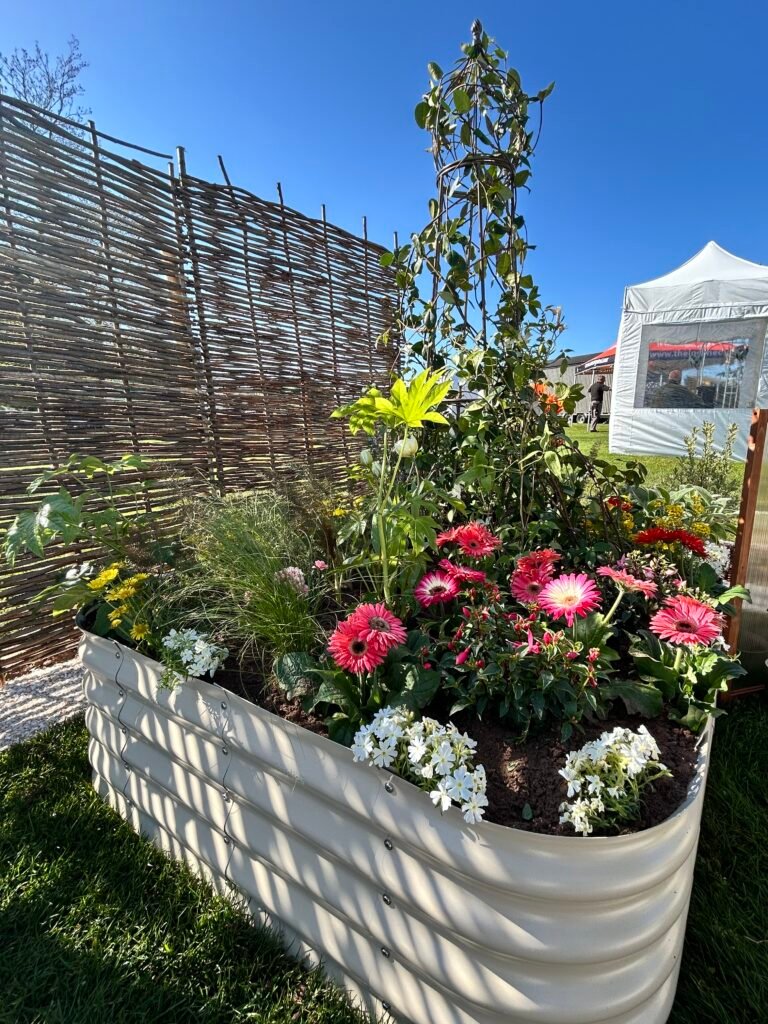
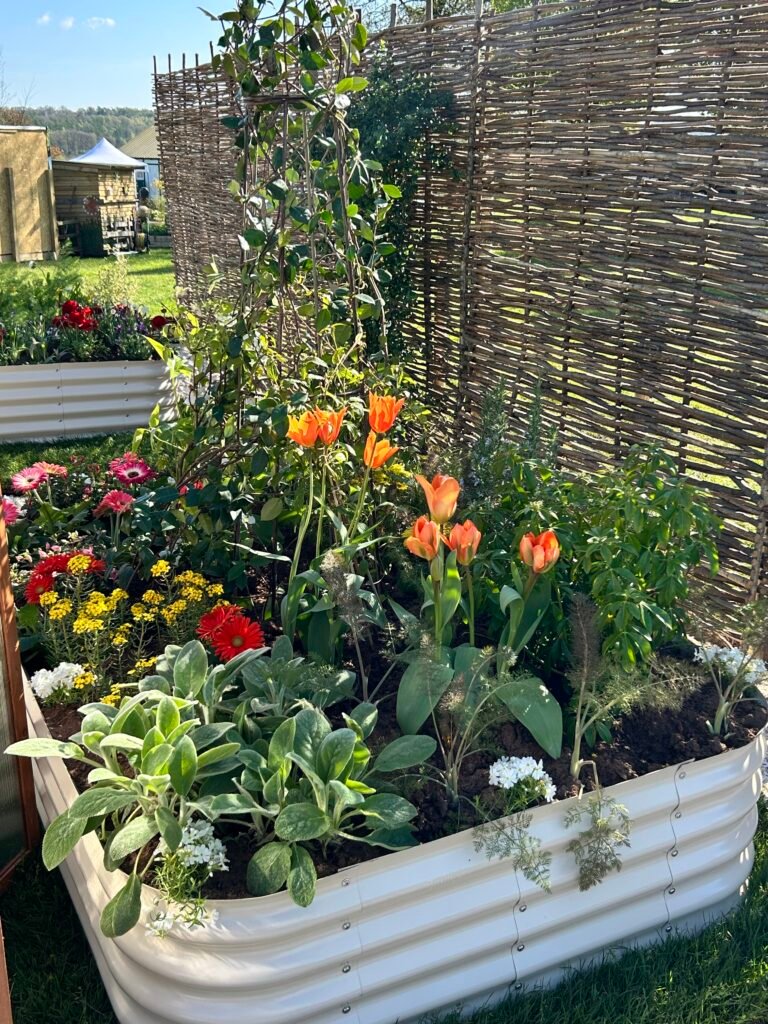
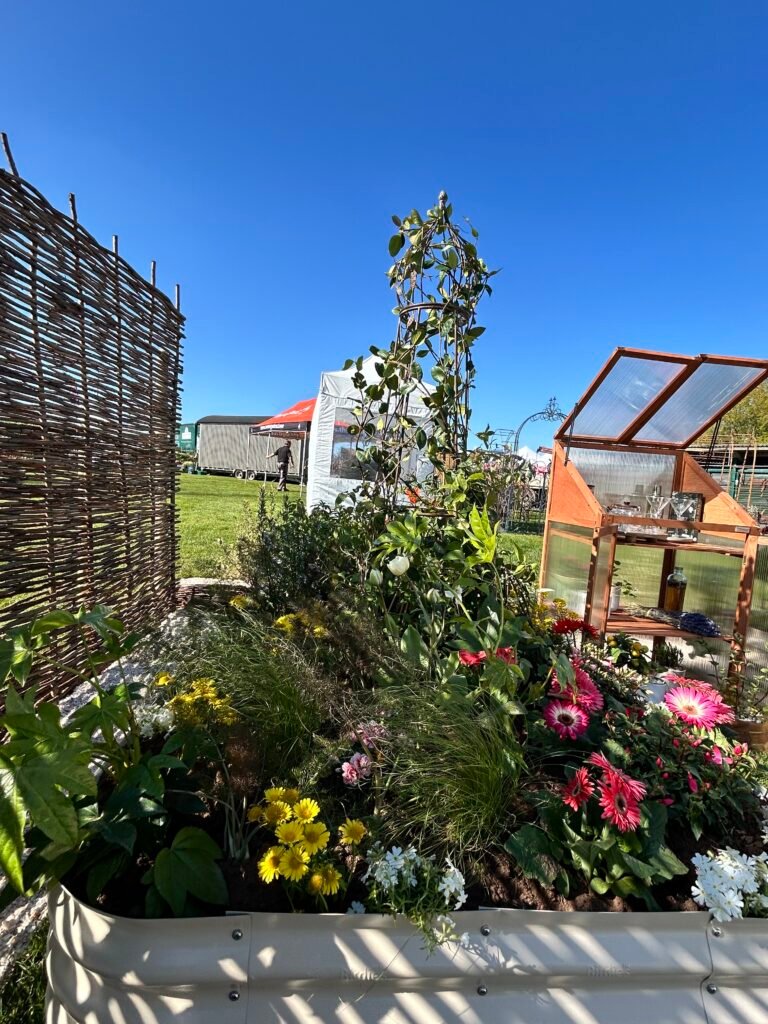
Designed to be calming and immersive, this border focuses on scent, texture and gentle movement to create a space that invites closer interaction and a slower pace.
Fragrant planting is layered with soft foliage and flowing grasses, allowing the border to be experienced not just visually, but through touch and scent. Subtle colour variation and strong plant forms help create clarity and contrast, ensuring the space remains accessible and enjoyable, including for those with reduced vision.
An obelisk provides vertical structure, supporting jasmine and white Clematis montana, adding height, seasonal flowering and scent at eye level. Ornamental grasses have been included to catch the breeze, creating a soft, rippling movement that brings the border to life.
Together, the planting demonstrates how a garden space can be designed to feel restorative, engaging and intuitive, using simple, thoughtful combinations that respond to how people experience their surroundings.
Planting palette:
Structure and backdrop:
Fatsia japonica (Japanese aralia)
Trachelospermum jasminoides (Star jasmine)
Clematis montana (Montana clematis)
Seasonal colour and interest:
Doronicum orientale ‘Leonardo’ (Leopard’s bane)
Tulipa spp. White Mountain (Tulip)
Sensory and fragrance planting:
Trachelospermum jasminoides (Star jasmine)
Choisya ternata (Mexican orange blossom)
Texture and movement:
Carex comans ‘Frosted Curls’
Foeniculum vulgare purpureum (Bronze Fennel)
Edible Border
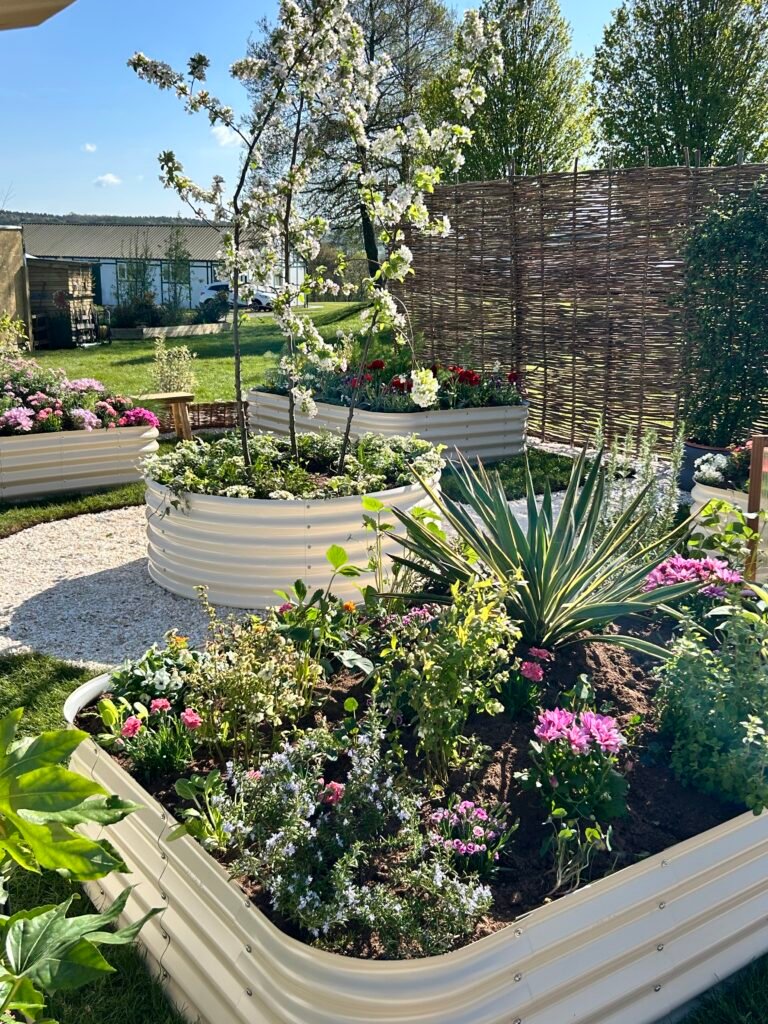
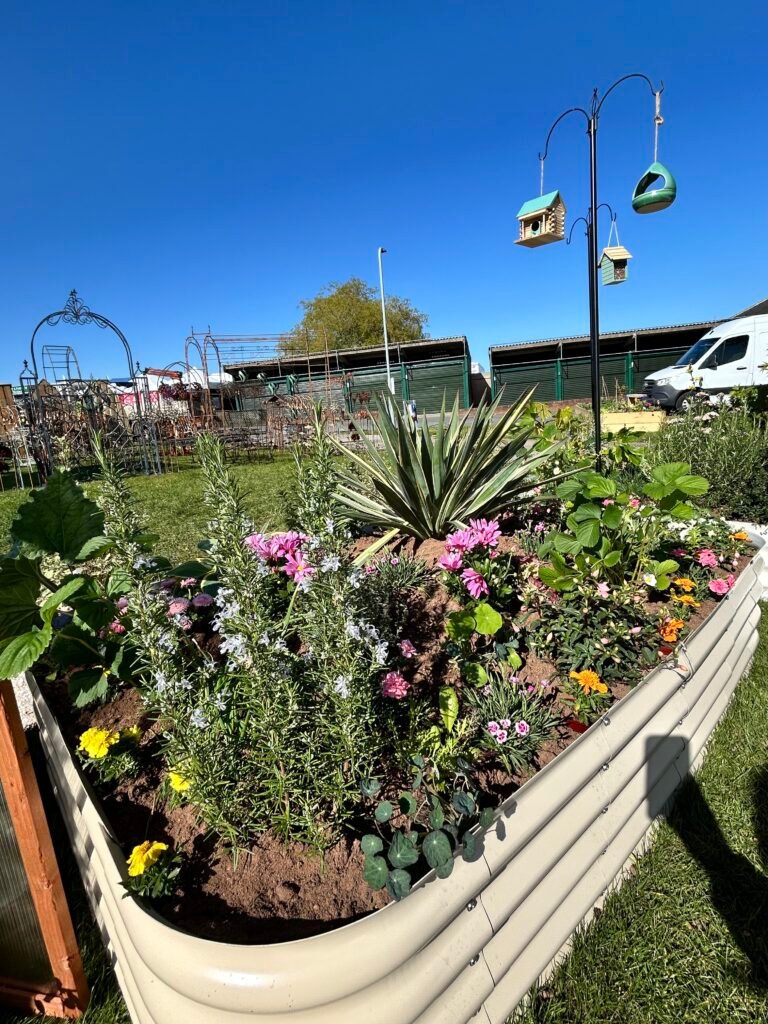
Designed to explore the connection between planting and everyday life, this border brings together edible flowers, herbs and fruits in a way that feels both practical and engaging.
The planting combines familiar herbs with lesser known edible flowers, encouraging exploration and creativity. Strawberries, thyme, oregano and chives provide a productive base layer, while additional seasonal planting such as violas and marigolds will be introduced to extend both colour and edible interest.
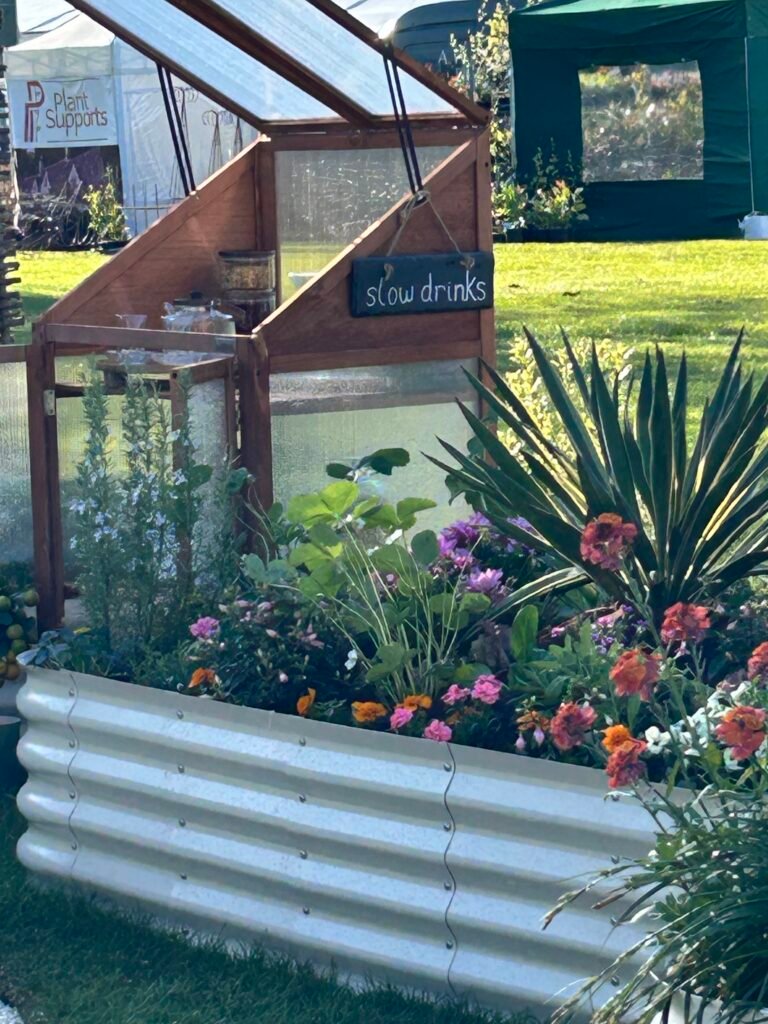
Positioned alongside the border, a grow house has been adapted into a Slow Drinks Cabinet, linking planting directly to use. Jars of dried rose petals, calendula and nettle sit alongside hanging lavender, while a glass teapot, cocktail shaker, martini glasses and a bottle of gin infused with juniper and rose petals create a setting that blends cultivation with preparation.
Pots of mint and other herbs are placed within the grow house, reinforcing the relationship between what is grown and how it can be used. Together, the border and drinks cabinet demonstrate how productive planting can be integrated into a garden in a way that feels natural, creative and part of daily life.
Planting palette:
Structure and backdrop:
Yucca variegata (Variegated Yucca)
Rosmarinus officinalis ‘Miss Jessopp’s Upright’ (Rosemary)
Seasonal colour and interest:
Calendula officinalis (Pot marigold)
Viola spp. (Viola)
Dianthus Pink Kisses (Pinks)
Dianthus Soft Cream (Pinks)
Slow Drinks Cabinet ingredients:
Urtica dioica (Nettle)
Lavandula angustifolia (Lavender)
Juniperus communis (Juniper)
Mentha spp. (Mint)
Productive planting:
Fragaria × ananassa (Strawberry)
Herbs and fragrance:
Thymus spp. (Thyme)
Origanum vulgare (Oregano)
Allium schoenoprasum (Chives)
Mentha spp. (Mint)
Drought border
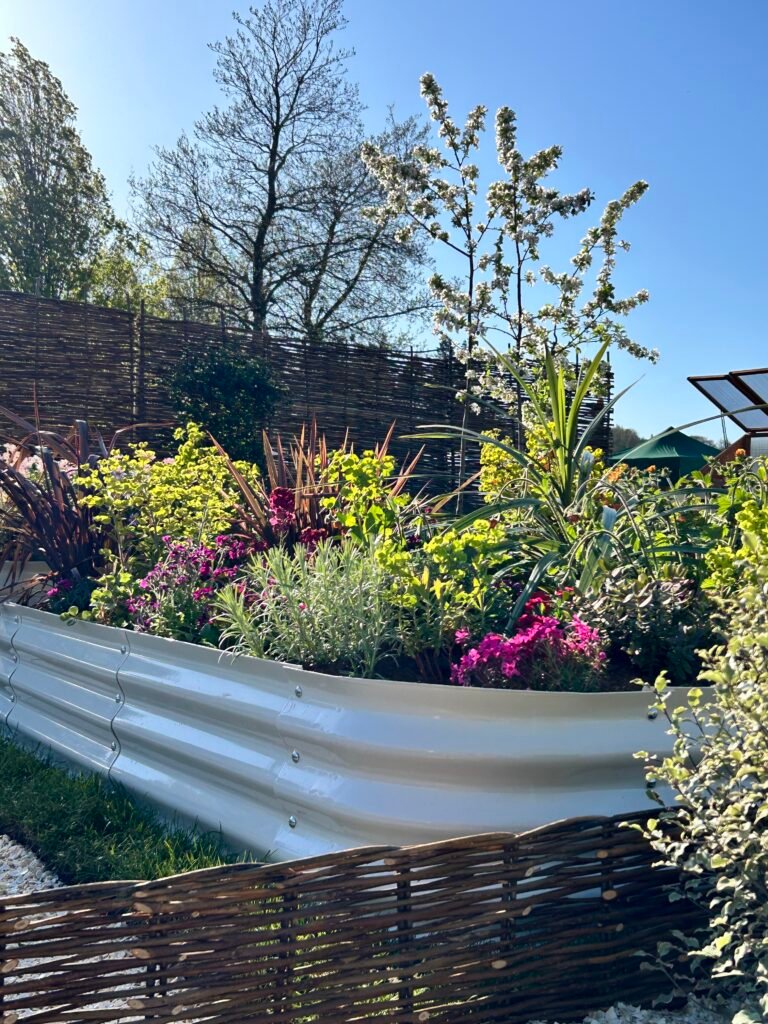
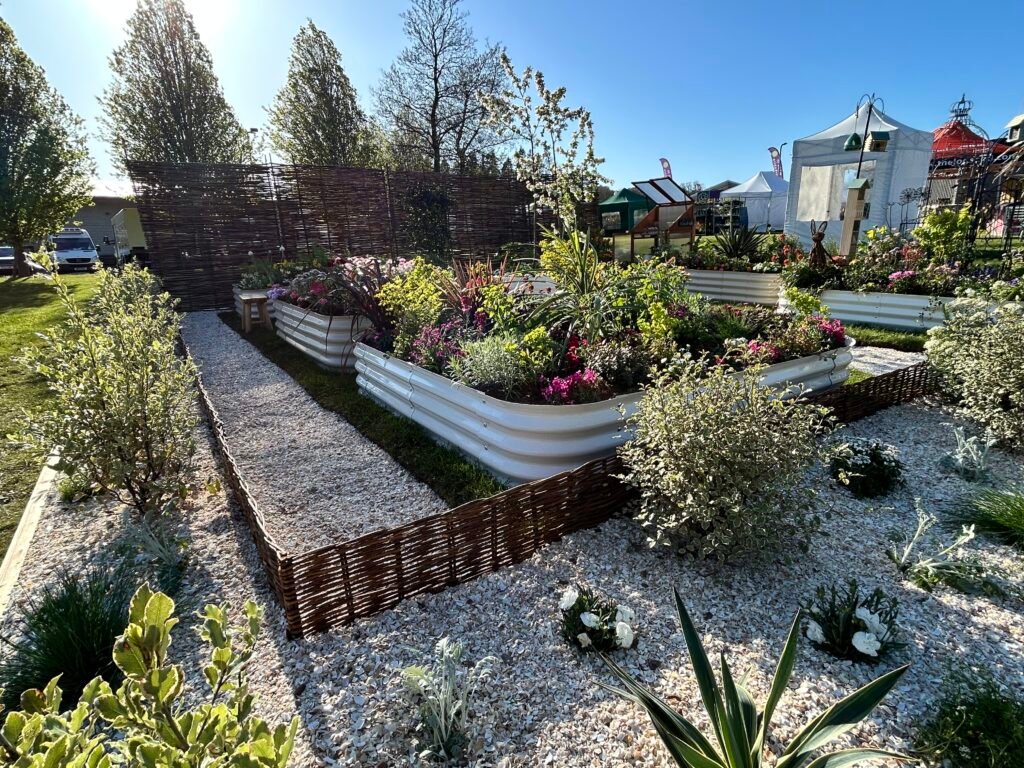
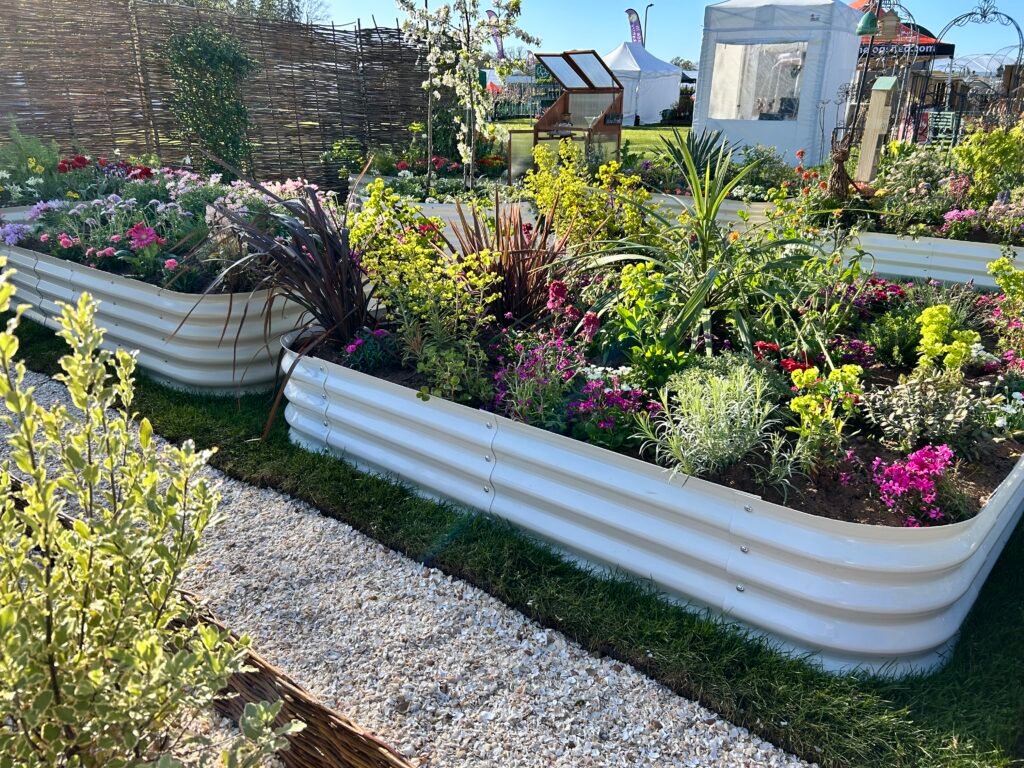
Designed to show how resilient planting can still feel rich, colourful and full of life, this border brings together drought tolerant plants with strong structure, silver foliage and bright seasonal colour.
A base of evergreen shrubs and architectural forms gives the border shape and presence, while lower flowering plants and groundcover soften the edges and bring movement through the planting. Silvers, greens, magentas, whites, oranges and pinks are layered through the border, creating contrast and warmth without losing the calm, cohesive feel of the wider garden.
Plants such as yucca, cordyline, hebe, euphorbia, sedum and thyme demonstrate how drought tolerant planting can be both ornamental and practical. Silver foliage from Senecio cineraria ‘Silver Dust’ and curry plant helps reflect light and reinforce the dry garden character, while aubrieta, dianthus, geum and cosmos bring seasonal colour through the scheme.
Together, the planting shows how a border designed for reduced water conditions can remain generous, textured and visually uplifting, offering a realistic approach to climate responsive planting in a domestic garden setting.
Planting palette:
Structure and backdrop:
Cordyline australis (Cabbage palm)
Phornium ‘Sundower ‘
Phornium ‘Platts Black’
Hebe ‘Red Edge’ (Shrubby veronica)
Hebe albicans (Shrubby veronica)
Seasonal colour and interest:
Sedum spp. (Stonecrop)
Euphorbia ‘baby martinii’ (Martin’s spurge)
Euphorbia ‘Robbiae’ (Wood spurge)
Euphorbia ‘Rainbow’ (Spurge)
Euphorbia amygdaloides ‘Purpurea’ (Purple wood spurge)
Dianthus spp. (Pinks)
Geum spp. (Avens)
Texture, foliage and movement:
Senecio cineraria ‘Silver Dust’ (Silver ragwort)
Carex spp. (Sedge)
Thymus spp. (Thyme)
Helichrysum italicum (Curry plant)
Groundcover and softening:
Aubrieta spp. (Rock cress)
Vinca minor (Lesser periwinkle)
Family Border
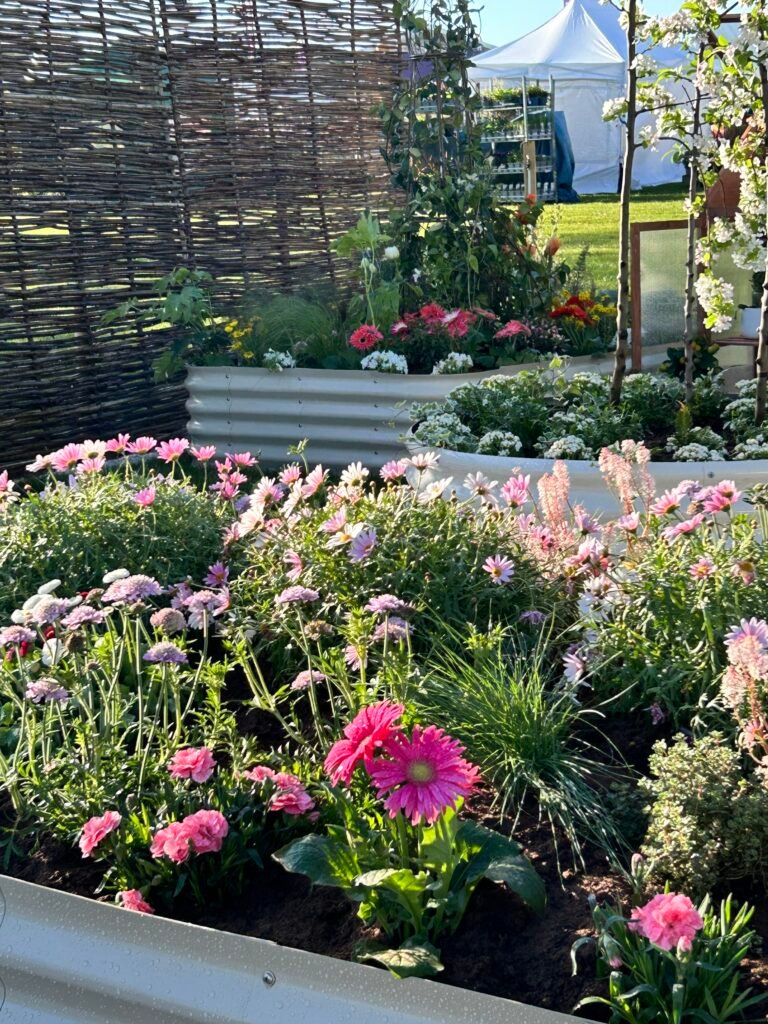
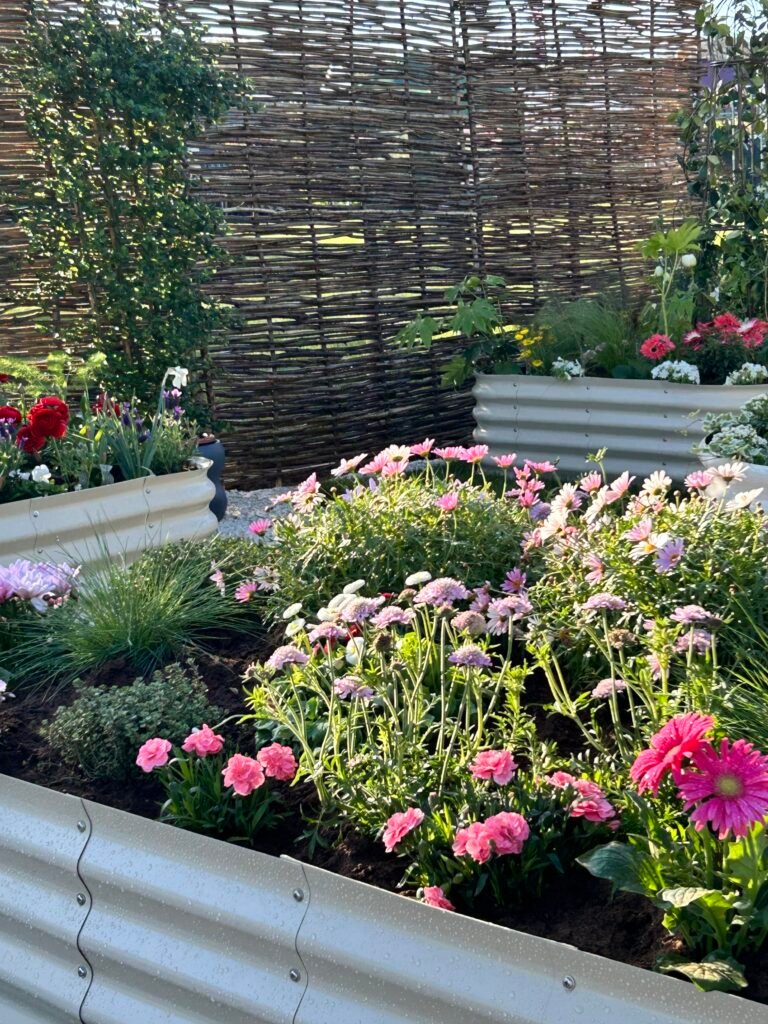
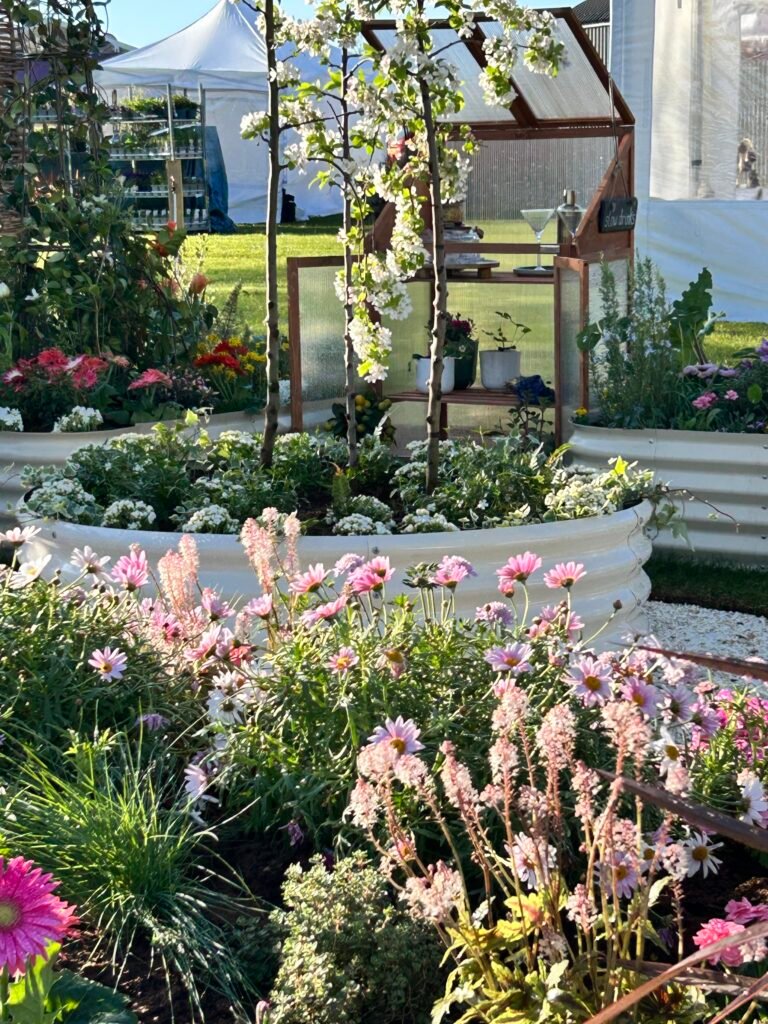
A considered palette of safe plants suited to family gardens, this border has been designed to show how planting can support everyday life without losing a sense of beauty or softness.
The planting brings together gentle colour, seasonal change and tactile foliage, creating a space that feels welcoming and relaxed while remaining resilient to regular use. Soft grasses and low planting allow for movement and interaction, while stronger structural plants provide shape and continuity throughout the year.
Care has been taken to select non-toxic varieties, ensuring the border feels reassuring as well as inviting, particularly in spaces shared by children and pets. Rather than restricting planting, the scheme demonstrates how thoughtful selection can create a garden that is both safe and rich in interest.
The result is a border that feels natural and easy to live with, offering a balance between practicality and atmosphere, where planting supports daily activity while still delivering texture, colour and seasonal variation.
Planting palette:
Structure and backdrop:
Leucanthemum vulgare (Marguerite daisy)
Tiarella cordifolia (Foam flower)
Seasonal colour and interest:
Scabiosa spp. (Scabious)
Dianthus Pink Kisses (Pinks)
Dianthus Soft Cream (Pinks)
Texture, foliage and movement:
Thymus spp. (Thyme)
Carex spp. (Variegated sedge)
Seasonal Border
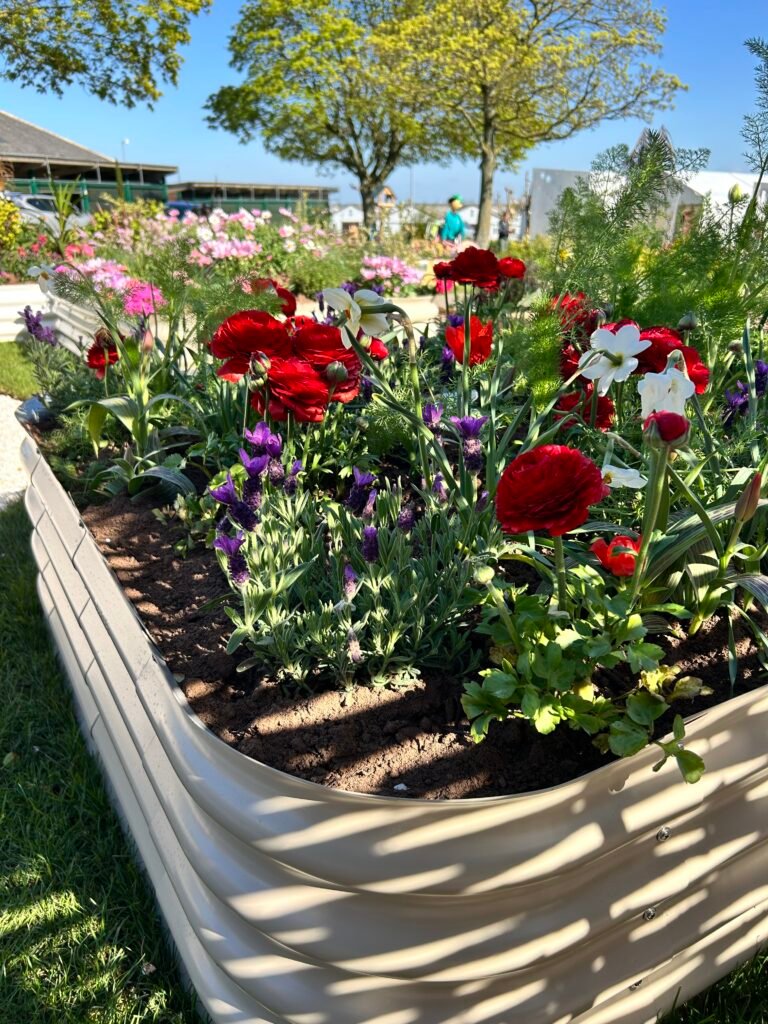
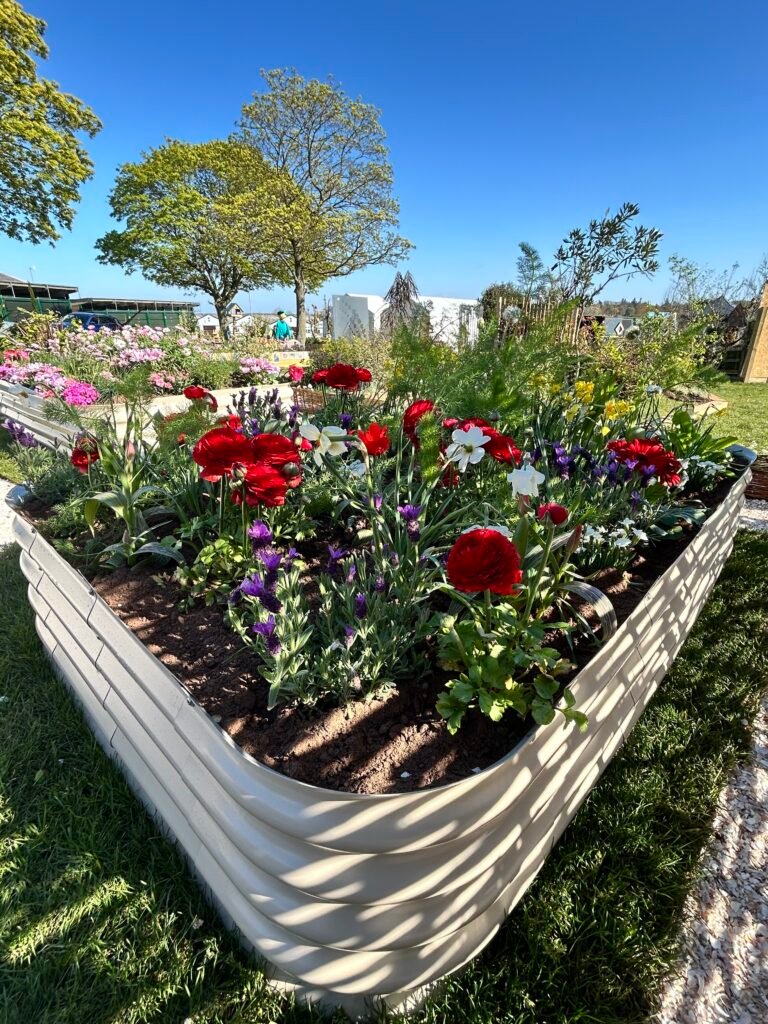
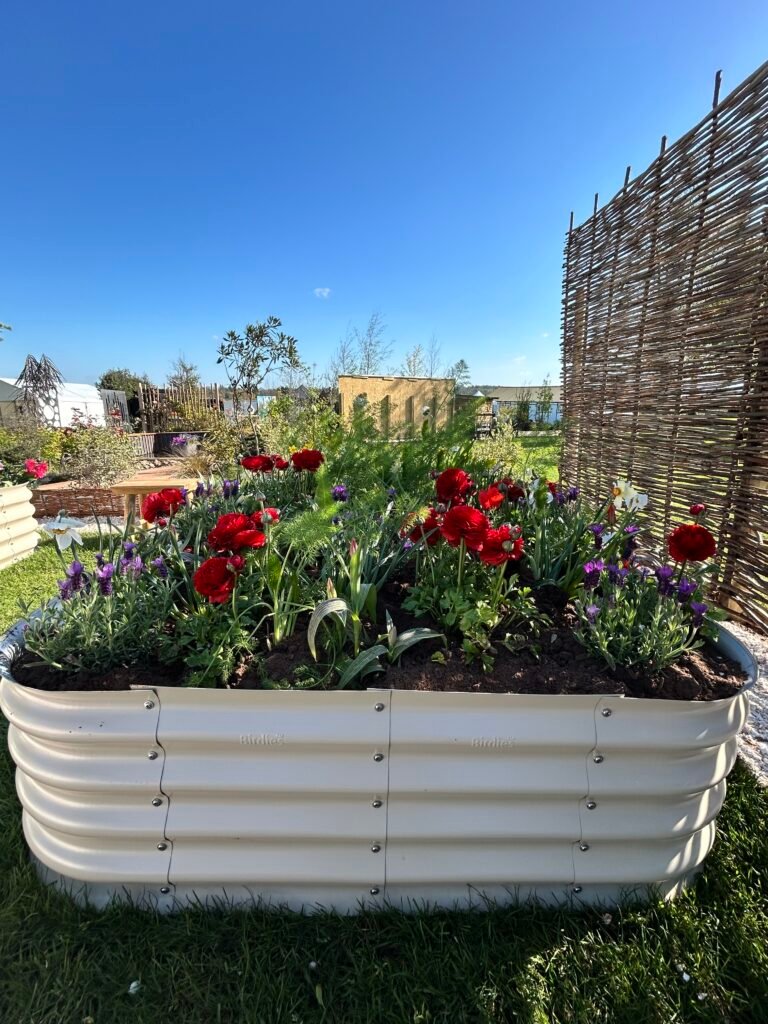
Designed to celebrate the rhythm of the seasons, this border focuses on how planting can create moments of colour, scent and change throughout the year. Layered bulbs, perennials and early flowering plants are used to build a sequence of interest, with each stage flowing naturally into the next.
Spring planting forms the foundation of the border, with familiar and widely available bulbs creating waves of colour and form. These are supported by softer planting that fills gaps as the season progresses, ensuring the border feels full and evolving rather than static.
The scheme has been designed to be accessible and cost-conscious, using bulbs and seed-grown planting to demonstrate how a garden can be created and built up over time without significant expense. By relying on simple, repeatable planting methods, the border shows how even a modest budget can deliver a generous and continually changing display.
The result is a space that feels alive and responsive, offering a sense of anticipation and renewal as the seasons shift, while remaining achievable for gardeners working within realistic budgets.
Planting palette:
Structure and backdrop:
Lavandula angustifolia (Lavender)
Foeniculum vulgare purpureum (Green Fennel)
Seasonal bulbs and colour:
Tulipa spp. ‘Red Riding Hood’ (Tulip)
Ranunculus ‘Elegance Rosa’
Calendula Offinalis (Pot Marigold)
All plants and materials used within the garden have been selected with their future use in mind. Following the show, everything will be reused within other gardens, ensuring that nothing goes to waste and that the life of the planting and materials continues beyond this temporary setting.
Together, the garden reflects a way of designing that grows with people over time, balancing beauty, practicality and sustainability.